Citation gap audit
Your link profile, mention footprint, and review standing against the competitors engines currently cite. Toxic links flagged for disavow, lost equity reclaimed, displacement targets ranked.
AI Citation Building
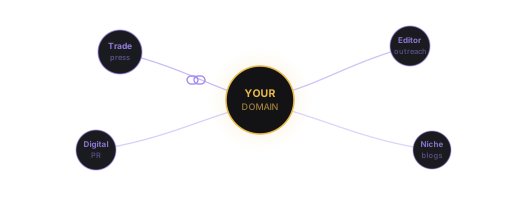
When an engine decides which brands to name, it weighs what the rest of the web says about you: editorial links, unlinked mentions, press coverage, reviews. We build that evidence layer as one system. Editorial placements earned through digital PR and direct negotiation, mentions in the sources LLMs actually retrieve from, and review signals that back it all up. No PBNs, no farms, no 'DA40 guaranteed' spreadsheet.
Why it matters now
Backlinks remain among Google's strongest signals, and that lever still gets pulled hard here. But LLMs widened the game: they register your brand appearing next to category terms across credible sources, hyperlink or not, and they weigh review sentiment while they're at it. One earned placement now pays three ways: ranking equity, citation eligibility, and recommendation confidence. The catch hasn't changed since the link-farm era: most of what's sold as this service will quietly sink you.
Contextual placements inside real content on publications your buyers read. Relevance over raw DA, natural velocity, disciplined anchors. Boring on purpose, because boring survives updates.
An LLM doesn't need an anchor tag to register authority. Consistent mentions beside your category terms, in sources engines retrieve from, move your recommendation rate on their own.
Original data, small surveys, and expert commentary that journalists actually want. One citable asset earns press, links, and AI-retrievable mentions in a single motion.
G2, Clutch, Trustpilot, Google Business Profile. Engines check what customers say before recommending anyone, so review velocity runs as part of the same program, not a separate line item.
What's included
Your link profile, mention footprint, and review standing against the competitors engines currently cite. Toxic links flagged for disavow, lost equity reclaimed, displacement targets ranked.
Citation-worthy data assets pitched to journalists and editors: the placements that earn rankings and AI mentions in one shot.
Manual, personalized outreach plus negotiated placements dealt directly with publishers. A vendor-negotiation background keeps quality placements below the going rate.
Expert commentary, podcast features, and roundup inclusions in the publications LLMs crawl. The mention layer most agencies don't even measure.
Generation systems for the platforms that matter in your category, with response frameworks that protect sentiment. A review stream is a citation stream.
Monthly measurement of how often ChatGPT, Perplexity, and Gemini name you for category prompts, tied to the placements that moved it. Full transparency: every placement logged with URL, context, and authority.
How the work runs
Where competitors get their authority: which domains, which mentions, which reviews. A realistic map of what you're missing and what it costs to close.
Original numbers, expert commentary, and linkable resources qualified by what editors and engines actually pick up, not by a DA spreadsheet.
PR, editorial outreach, negotiated placements, mentions, and reviews running as one motion. Velocity paced to read as earned, because it is.
Referring domains, mention growth, sentiment, and AI recommendation rate reported monthly against baseline. What moves gets doubled; what stalls gets re-diagnosed.
Client Outcome
From the results library: measured performance across a full engagement window.
Read the full story“Our sales cycle starts with an engineer Googling at their desk. We now show up in that moment, before the RFQ list is written. That's changed the quality of our inbound completely.”
Straight answers
No sales spin. If the honest answer is "it depends," we tell you what it depends on.
Keep exploring
Ready when you are
Free citation gap audit: your link and mention footprint against the brands AI currently names, a toxic-link check, and a ranked list of realistic targets.
Get a free citation gap audit