Buyer prompt mining
Real question language extracted from your funnel: calls, tickets, reviews, forums, and search suggestions. The corpus your category's prompts are built from.
Prompt Research
Your buyers stopped typing three-word queries. They ask ChatGPT full questions, in context, with follow-ups, and every keyword tool you own is blind to all of it. Prompt research maps those conversations: the phrasings, the intent clusters, the prompts where competitors get named and you don't. Then it turns that map into a content and entity plan.
Why it matters now
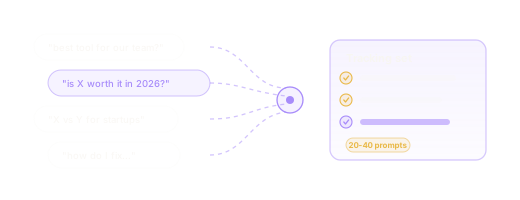
Prompt intelligence platforms raised at billion-dollar valuations in the last year, which tells you where demand is heading. But a dashboard of 400 million prompts is not a strategy. The rare skill is editorial: choosing the 20 to 40 prompts that map your buyers' actual journey, reading why engines answer them the way they do, and turning that into pages, entities, and citations. That's the service, and very few teams sell it done-for-you.
Sales calls, support tickets, community threads, People Also Ask, and autocomplete patterns, mined for the questions behind the keywords. The phrasing matters: engines answer 'best X for Y' and 'is X worth it' from different sources.
Prompts grouped into journey stages: problem, comparison, validation, purchase. Each cluster gets an owner page or entity signal, so nothing competes with itself and nothing important goes unanswered.
Every cluster scored by commercial value against citation difficulty. Where competitors are entrenched, we route around. Where engines answer from weak sources, we strike first.
What's included
Real question language extracted from your funnel: calls, tickets, reviews, forums, and search suggestions. The corpus your category's prompts are built from.
Prompts grouped by intent and funnel stage, each mapped to the page or asset that should own it. Gaps become briefs; overlaps get merged.
Which prompts name competitors and not you, engine by engine, with the sources that put them there. Your displacement targets, ranked.
The final 20 to 40 prompts installed as your monthly yardstick: mention rate, citation rate, and sentiment tracked against the same set over time.
Every uncovered prompt cluster turned into a prioritized brief: the question, the evidence it needs, the format engines extract from. Feeds straight into GEO content production.
Models retrain and buyer language drifts. The set gets re-mined and re-scored every quarter so you're never optimizing for last year's questions.
How the work runs
We pull the real phrasings from your funnel and your category's public conversations. No invented personas, no guessed queries.
Intent groups assembled across the funnel, so the set covers discovery through decision instead of clustering around one obvious money term.
Value against difficulty, engine by engine. You see which clusters are winnable this quarter and which need entity work first.
The tracking set goes live. Every content piece, citation, and entity fix that follows gets measured against these exact prompts.
Client Outcome
From the results library: measured performance across a full engagement window.
Read the full story“Nine months ago our domain was invisible. Now HR managers land on our compliance answers before the government's own pages, and they sign up. That still feels unreal.”
Straight answers
No sales spin. If the honest answer is "it depends," we tell you what it depends on.
Keep exploring
Ready when you are
Free starter prompt map: the top prompts in your category, who the engines name today, and where the open ground is.
Get your prompt map