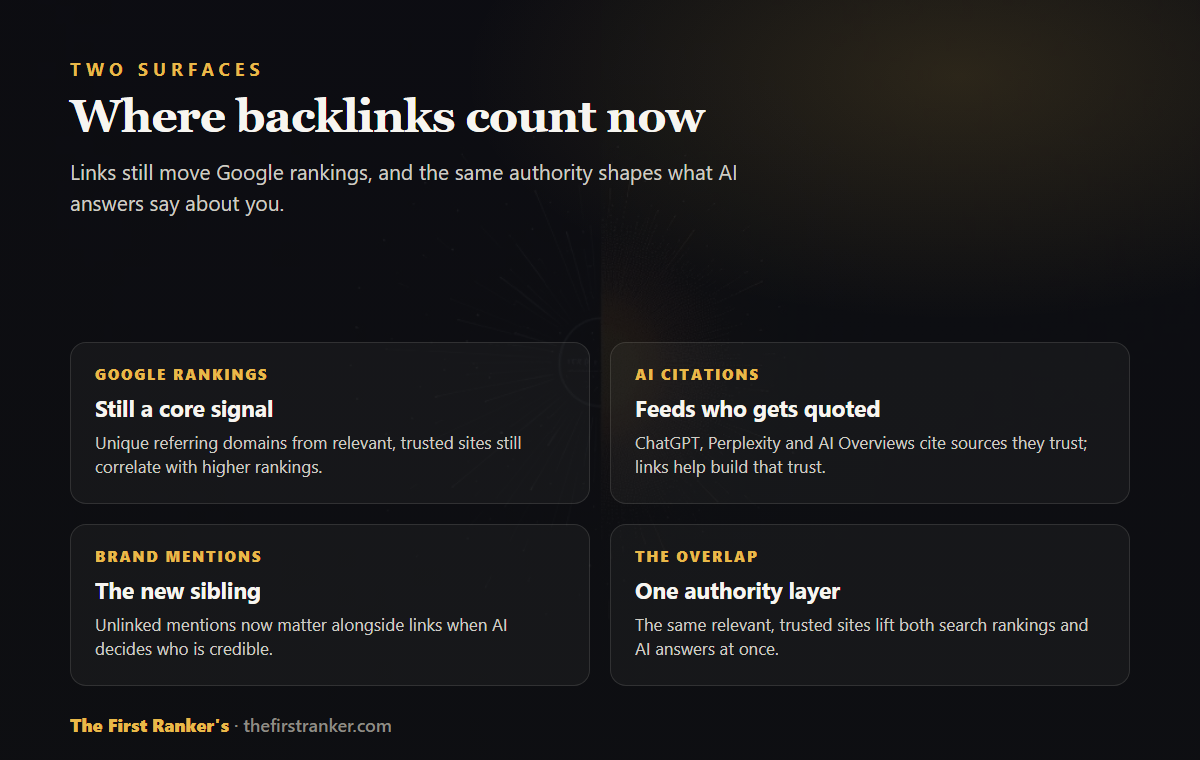
- Backlinks still matter, and now they matter on two surfaces: Google rankings and AI citations.
- A high-quality link is relevant, authoritative, naturally anchored, and well placed.
- Count referring domains, not raw links. Ahrefs found 66.31% of pages have zero.
- AI engines weigh brand mentions and citations from trusted sources, often the same sites that link to you.
- Earn both links and mentions from relevant, trusted sites and you win on search and AI at once.
Every few months someone declares backlinks dead, usually right after an AI search headline. The reality is less dramatic and more useful: backlinks still matter, their role has broadened, and the work that earns good ones now pays off in two places. This guide separates what changed from what did not, and shows where to focus.
The short answer: yes, backlinks still matter in 2026. Google continues to treat relevant, authoritative links as a core ranking signal, and AI answer engines lean on citations and brand mentions from trusted sources to decide who to quote. The same authoritative sites often drive both, so quality links now serve search rankings and AI answers together.
Do Backlinks Still Matter?
On traditional search, the evidence has not moved much. Google has repeatedly confirmed that links are among its strongest signals, and independent studies keep finding that unique referring domains correlate with higher rankings. The scarcity is the opportunity: most of the web has no backlinks at all, so a modest set of quality links is a genuine edge.
What Makes a High-Quality Backlink?
The word "backlink" hides a huge quality range, and chasing volume is how sites waste months. A link earns its keep when it is relevant to your topic, comes from a trusted source, uses natural anchor text, and sits inside real editorial content as a followed link. Miss most of those and the link does little, or worse.
This is where the old advice and the new advice agree: one strong, relevant link beats a hundred thin ones. For how to weigh links in practice, see the backlink building playbook, and for the anchor-text side specifically, our guide to anchor text and safe ratios.
Backlinks vs Brand Mentions and AI Citations
Here is the real shift. AI answer engines do not count links the way Google does; they decide who to cite based on trust and corroboration. Links from authoritative, on-topic sites are part of how a brand earns that trust, and so are brand mentions, sometimes with no link at all. The two surfaces overlap because the same trusted sources feed both.
That is why AI-heavy sources like Reddit and trusted publications matter so much: engines quote them because they trust them. See how ChatGPT picks its sources and why Reddit is so heavily cited. Building presence and links on those sources is the heart of our citation and link building service.
How to Earn Quality Links Now
The tactics have not changed much, only the payoff has grown. Publish content worth citing, earn placements on relevant and trusted sites, reclaim unlinked mentions, and build a base on free niche platforms that fit you. The full playbook covers all six, and to find niche-fit free platforms fast, run your site through our free backlink finder. For the free-source categories in depth, read free backlinks that actually work.
Before you chase new links, check the ones you have. A quick look at your profile, covered in how to check backlinks to your website, tells you what is already working and what to prune.
Frequently Asked Questions
Yes. Google has long confirmed that links are among its strongest ranking signals, and studies still find unique referring domains correlating with higher rankings. Their role is evolving as AI search adds brand mentions and citations to the mix, but authoritative, relevant links remain a foundation of visibility.
Their job broadened rather than shrank. Traditional rankings still weigh links heavily, and AI answer engines lean on citations and mentions from sources they trust, many of which are the same authoritative sites that link to you. So the work that earns good links now pays off on two surfaces instead of one.
A high-quality backlink is relevant, from a trusted source, with natural anchor text, placed inside real editorial content and followed. One link that meets those tests is worth more than a hundred from thin, unrelated, or spammy pages. Relevance and authority do most of the heavy lifting.
Not the way Google counts them, but the signal overlaps. AI engines decide who to cite based on trust and corroboration, and links from authoritative, on-topic sites are part of how a brand earns that trust. Brand mentions on those same sites matter too, sometimes without a link at all.
There is no fixed number. Unique referring domains and their relevance matter far more than total links, and Ahrefs found that 66.31% of pages have zero backlinks. A small set of quality links from trusted, relevant sites can outrank pages with far larger but weaker profiles.
They are joining them, not replacing them. For AI answers, an unlinked mention on a trusted site can carry weight; for Google rankings, followed links still lead. The smart move is to earn both from the same relevant, authoritative sources rather than betting on one.
The Bottom Line
Backlinks are not dead; their job got bigger. Relevant, authoritative links still move Google rankings, and the same authority now helps decide whether AI engines cite you. Focus on quality over volume, earn links and mentions from trusted sources in your niche, and you compound visibility on both surfaces at once.