- You earn backlinks, you do not buy them. Bought links violate Google's guidelines and invite penalties.
- Six tactics still work: original content, digital PR, guest and resource pages, broken-link building, unlinked-mention reclamation, and free niche platforms.
- Judge every link on four things: relevance, authority, anchor text, and placement. One relevant link beats a hundred thin ones.
- Count referring domains, not total links. Most of the web has zero, so a few good ones are a real edge.
- The same authoritative sites that link to you also feed AI citations in ChatGPT, Perplexity, and Google AI Overviews.
- Start free: our backlink finder returns only the niche-fit platforms where you can earn links today.
Almost every guide to ranking says the same thing at some point: you need backlinks. Few explain how to actually get them without buying junk or wasting weeks. This playbook does. It covers what a backlink is, the six ways to build them that still work in 2026, how to tell a good link from a worthless one, and how to earn links for free before you spend a cent.
The short answer: build backlinks by earning them. Publish content worth citing, get listed on relevant platforms that fit your niche, contribute to communities and press, reclaim unlinked brand mentions, and fix broken links you can replace. Focus on relevance and authority over volume, and count unique referring domains rather than total links.
What Is a Backlink, and Why Does It Still Matter?
A backlink is a link from another website to yours. Search engines read links as votes: when a trusted, relevant site links to you, it lends you a share of its credibility. That is why links remain one of Google's oldest and strongest ranking signals, and why the count of unique referring domains still correlates with higher rankings.
What changed is the second audience. AI answer engines lean on brand mentions and citations from sources they trust when they decide who to quote, so the same authoritative sites that link to you also shape what the machines say about you. If you want the deeper argument, we cover whether backlinks still matter in the AI era in its own guide.
The 6 Ways to Build Backlinks That Still Work
Ignore the schemes and shortcuts. These six tactics have survived every algorithm update because they produce links a human editor would call fair. Start with the ones that fit your time and niche.
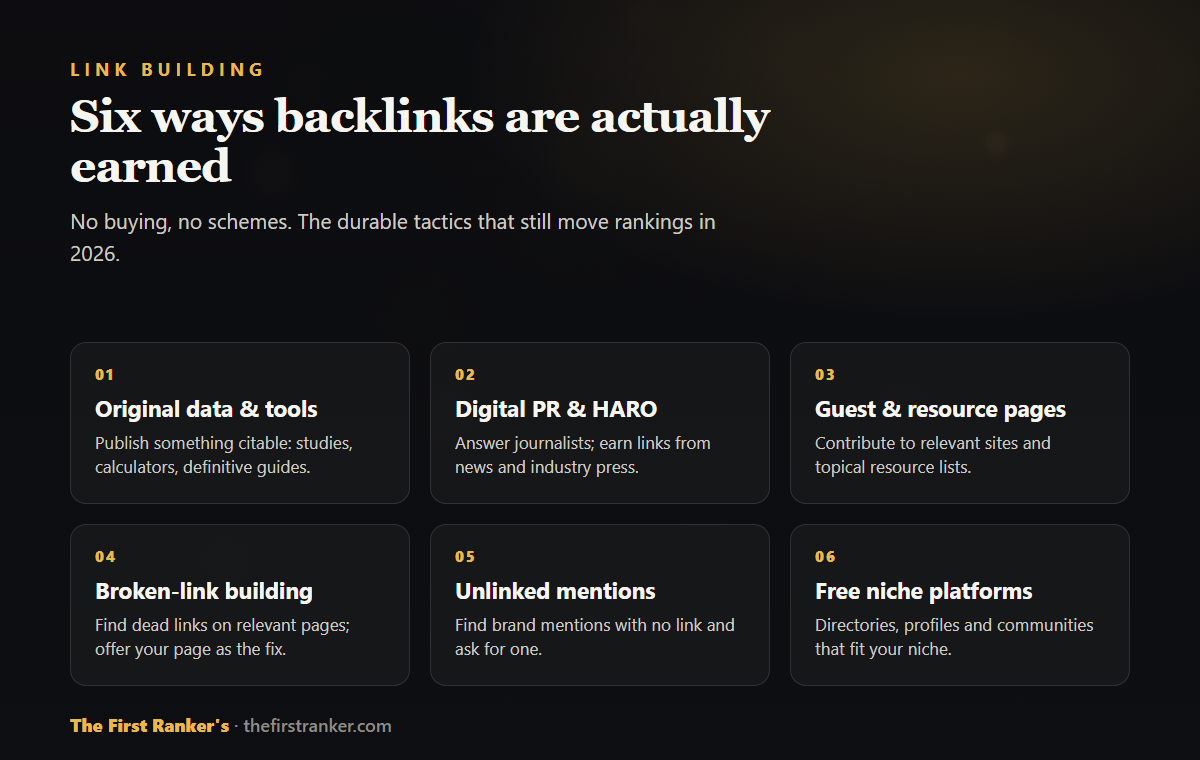
Publish original data, tools, and definitive guides
The most durable links are the ones you never ask for. Original research, a free calculator, or a genuinely complete guide becomes a reference other writers cite. It is slow to produce and fast to compound: one strong asset can earn links for years.
Digital PR and HARO-style journalist requests
Reporters need sources. Answer relevant queries with a sharp, quotable insight and you earn links from news and industry sites that carry real authority. It is the fastest route to high-trust links, and those same placements feed your brand mentions across the web.
Guest posts and resource-page placements
Contribute a genuinely useful article to a relevant site, or get your best asset added to a topical resource list. The bar is relevance: a link from a site in your industry is worth more than one from a bigger but unrelated page. Pitch the value to their readers, not the link to you.
Broken-link building
Find a dead link on a relevant page, then offer your working page as the replacement. You are doing the site owner a favor, which makes the yes easy. It is one of the fastest tactics because the interest and context already exist; you are just fixing something.
Reclaim unlinked brand mentions
Sites mention brands without linking all the time. Search for places that name you but do not link, then ask for the link. The mention proves they already know you, so this is often the shortest path from outreach to a live link.
Free niche platforms, directories, and communities
Relevant directories, Web 2.0 profiles, Q&A sites, and communities give you a base of legitimate links at no cost, as long as they fit your niche. The trap is generic lists that send everyone to the same thousand sites. Our free backlink finder reads your site and returns only the platforms that match, and our guide on free backlink sites that actually work covers the categories in depth.
What Makes a Backlink Worth Building?
Not all links are equal, and chasing volume is how sites waste months. Before you pursue any link, weigh it on four attributes. If it fails most of them, skip it.
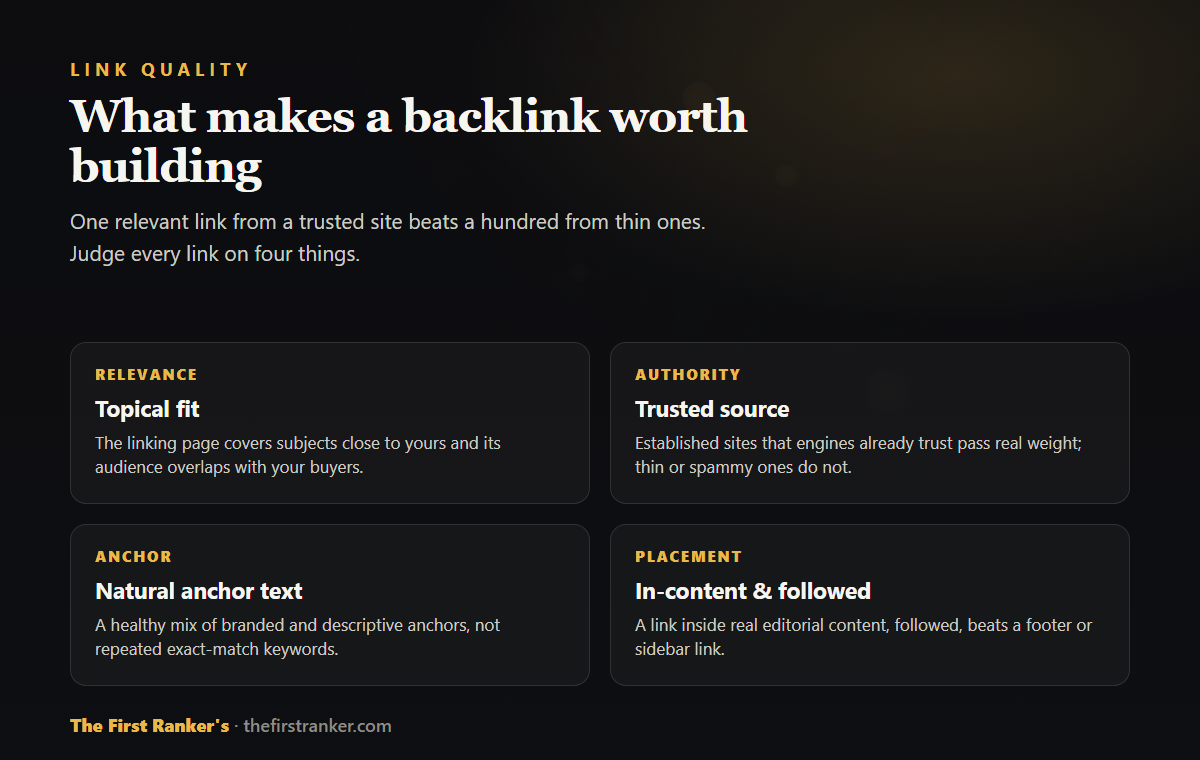
- Relevance: the linking page covers subjects close to yours and shares your audience. A finance brand earns little from a design gallery.
- Authority: links from established, trusted sites move the needle; links from thin or spammy sites do not, and can hurt.
- Anchor text: the clickable words of the link. A natural mix of branded and descriptive anchors is healthy; repeated exact-match keywords look manipulative. See our guide to anchor text and safe ratios.
- Placement: a followed link inside real editorial content beats a footer or sidebar link that every page shares.
How to Build Backlinks for Free
You do not need a budget to start. Four of the six tactics above cost nothing but time: original content, unlinked mentions, broken-link building, and free niche platforms. The blank-page problem is the real blocker, which is where matching helps.
Drop your URL into our free backlink finder and it names your niche, then hands back only the free platforms that fit it, filtered for relevance and spam. Work that list first, then layer in outreach. For the full category breakdown, read free backlinks that actually work.
Mistakes That Get You Penalized
The wrong tactics do more damage than slow progress. Avoid these entirely.
- Buying links: paid links that pass ranking value violate Google's guidelines. The short-term bump is not worth the manual action risk.
- Private blog networks (PBNs): networks of sites built only to link to you are a known pattern engines detect and discount.
- Exact-match anchor stuffing: making every link use the same keyword anchor is the clearest manipulation signal there is.
- Volume over relevance: a thousand links from unrelated sites are worth less than ten from your industry, and can drag you into a cleanup.
If you have inherited a messy profile, do not panic. Most low-quality links are discounted automatically; only a manual action calls for the disavow tool. Our guide to toxic backlinks and backlink audits shows how to assess and, when needed, disavow.
How to Track the Links You Build
Link building you cannot measure is guesswork. Check your profile regularly so you know which tactics actually land, and watch unique referring domains rather than raw totals. Google Search Console shows the links Google has found, and a free checker adds what its own crawler sees. The full walkthrough is in how to check backlinks to your website.
When links become a real channel, the off-page work overlaps with getting cited by AI, which is the heart of our citation and link building service.
Frequently Asked Questions
A single outreach or submission can land a link in days, but a profile that moves rankings takes months of steady work. Treat link building as a compounding habit, not a one-off campaign: a few relevant links a month beats a burst that stops. Most sites see ranking movement once a cluster of quality referring domains accumulates over one to three months.
Earn them from platforms that fit your niche: relevant directories, Web 2.0 profiles, communities, and roundups, plus original content worth citing. Our free backlink finder reads your site and returns only the free platforms that match, so you skip the generic lists. Free links work when they are relevant and real, not when they come from unrelated link farms.
There is no magic number; unique referring domains and their relevance matter far more than total link count. Ahrefs found 66.31% of pages have zero backlinks, so even a handful from trusted, on-topic sites puts you ahead of most competitors. Chase quality and topical fit, not a total.
Yes, on both surfaces. Google still treats links as a core ranking signal, and the same authoritative, relevant sites that link to you also shape what ChatGPT, Perplexity, and Google AI Overviews say about you. Links and brand mentions now feed traditional rankings and AI citations together.
Reclaim unlinked mentions and fix broken links. Finding sites that already name you without linking, or that link to a dead page you can replace, gives the shortest path from outreach to live link because the context and interest already exist. Digital PR and niche directory submissions are the next fastest.
Do it yourself while the volume is small and the tactics are simple, like directories, communities, and unlinked mentions. Bring in help when link building becomes a real channel that needs consistent outreach, digital PR, and reporting. For a scoped plan, get a personalized backlink audit and strategy.
The Bottom Line
Building backlinks is not a trick; it is a habit. Earn links from relevant, trusted sites, weigh each on relevance, authority, anchor text, and placement, and start with the free platforms that fit your niche before you spend anything. Count referring domains, avoid the schemes that invite penalties, and track what lands.
Do that steadily and the results compound on both surfaces: higher rankings in Google and more citations inside AI answers. If you want a clear read on where your link profile stands and the fastest way to grow it, we will map it for you.