- A toxic backlink is a spammy, irrelevant, or manipulative link a real editor would never place.
- Most low-quality links are harmless; Google discounts them automatically.
- Audit in four steps: pull, assess, flag, decide.
- The disavow tool is a last resort, mainly for a manual action you cannot fix by removal.
- The bigger risk is often an over-optimized anchor profile you built yourself.
Toxic backlinks sound scary, and the SEO tool industry is happy to keep it that way. The honest picture is calmer: Google ignores most junk links, so a handful of spammy referrers is rarely worth losing sleep over. What deserves attention is a genuine manipulation pattern, and knowing the difference is the whole job of a backlink audit. Here is how to do one properly.
The short answer: a toxic backlink comes from a spammy, irrelevant, or manipulative site. Most are harmless because Google discounts them automatically. Run a backlink audit to pull your links, assess quality, and flag the toxic ones, then disavow only when you have a manual action tied to links you cannot get removed.
What Is a Toxic Backlink?
A toxic backlink is a link from a source that exists to manipulate rankings rather than to inform readers: link farms, private blog networks, unrelated or auto-generated pages, and sites stuffed with exact-match anchors. The common thread is that no real editor would place the link. A single odd referrer is normal; a pattern of them is the signal that matters.
Note that quality is about the link, not just the site. A relevant link with a natural anchor from a modest site can be fine, while a link from a large but unrelated page with a keyword-stuffed anchor is not. For the anchor side specifically, see our guide to anchor text and over-optimization.
How to Run a Backlink Audit
An audit turns a messy link list into a clear decision. Four steps get you there.
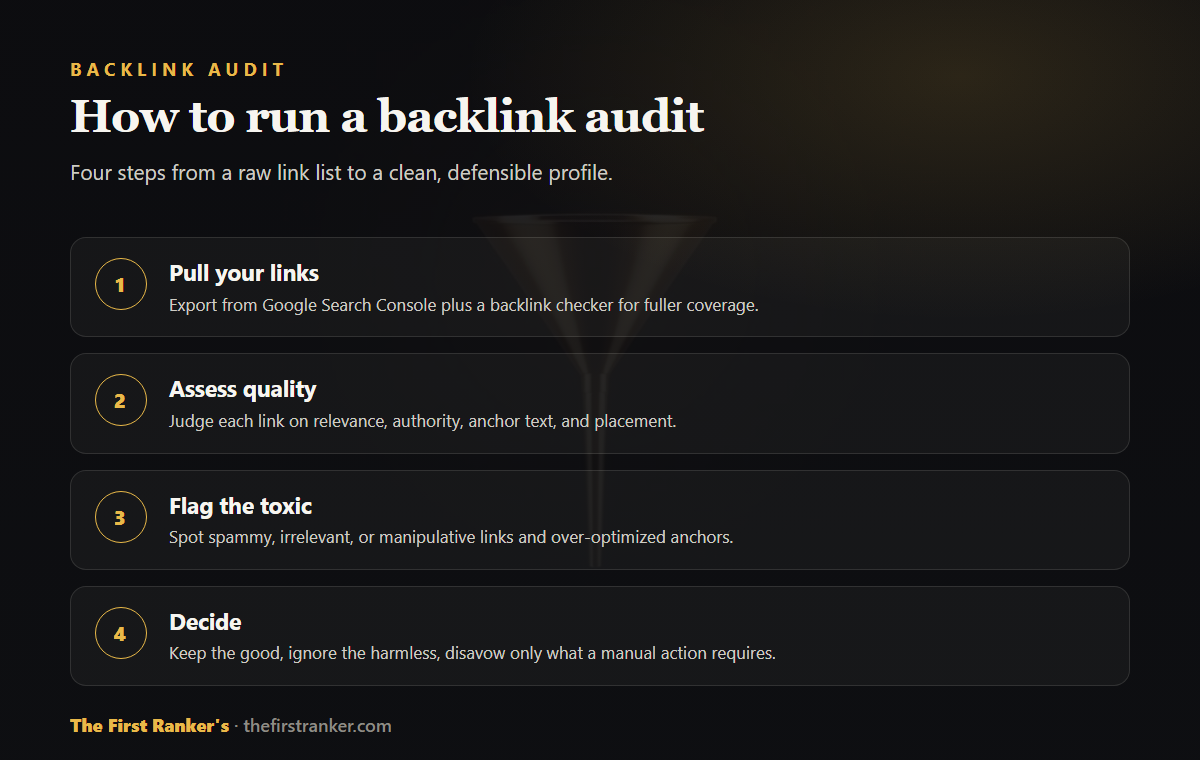
- Pull your links: export from Google Search Console and add a backlink checker for fuller coverage. The step-by-step is in how to check backlinks to your website.
- Assess quality: judge each link on relevance, authority, anchor text, and placement, the same tests you would use when building backlinks.
- Flag the toxic: mark spammy, irrelevant, or manipulative links and any over-optimized anchor patterns. Tool flags are a starting point, not a verdict.
- Decide: keep the good, ignore the harmless (most links), and reserve disavow for what a manual action genuinely requires.
When to Disavow (and When Not To)
This is where most people overreact. Google has said for years that it discounts low-quality links automatically, which means the disavow tool is not routine maintenance. Reach for it only when you have a manual action tied to unnatural links you cannot get removed, or a clear negative-SEO attack. Disavowing good links by mistake can quietly cost you rankings, so precision beats enthusiasm.
For everything else, the better use of your time is earning quality links and keeping your own anchor profile natural. That is the durable side of a healthy profile, covered in do backlinks still matter.
Get a Done-For-You Backlink Audit
A thorough audit takes judgment: knowing which flags are noise, which anchors are risky, and which links are quietly helping you. If you would rather not guess, we will do it for you. We pull your full profile, assess every link, flag genuine risks, and map the safest way to grow the good links, on both search and AI surfaces. It ties directly into our citation and link building service, and you can start with a free niche match in our backlink finder.
Frequently Asked Questions
A toxic backlink comes from a spammy, irrelevant, or manipulative site and can look like an attempt to game rankings. Common examples are links from link farms, private blog networks, unrelated foreign-language sites, and pages stuffed with exact-match anchors. The label matters less than the pattern: links a real editor would never place.
Pull your link profile from Google Search Console and a backlink checker, then scan for low-quality patterns: irrelevant sites, thin or spammy domains, and unnatural anchor text. Many tools flag potentially toxic links automatically, but treat those flags as a starting point for human review, not a verdict.
Usually no. Google says it discounts most low-quality links automatically, so the disavow tool is mainly for cases where you have a manual action tied to unnatural links you cannot get removed. Disavowing good links by mistake can hurt you, so use it sparingly and deliberately.
The disavow tool lets you tell Google to ignore specific links or domains when assessing your site. You upload a text file of the domains to disregard. It is a last resort for manipulative links you cannot remove, not routine maintenance, and most sites never need it.
Rarely on their own, because Google largely neutralizes low-quality links rather than penalizing for them. The real risk is a manual action for a clear manipulation pattern, or an over-optimized anchor profile you built yourself. Focus on earning good links; only escalate to disavow when there is a genuine problem.
A light check every quarter is plenty for most sites, plus a deeper look if rankings drop or you inherit a site with unknown link history. Regular monitoring means you spot unnatural growth early, whether from a negative-SEO attempt or an old campaign, before it becomes a problem.
The Bottom Line
A backlink audit is less about panic and more about clarity. Pull your links, assess them honestly, flag the genuinely toxic, and act with restraint: keep the good, ignore the harmless, and disavow only when there is a real problem you cannot fix by removal. Do that, keep your anchor profile natural, and your link profile stays an asset rather than a liability.